Why Mid-Size Companies Are Winning the AI Automation Race While Enterprises Struggle
· Paul Chada · 7 min
Oracle just cut thousands of jobs while still struggling to deploy AI effectively. Meanwhile, mid-size operations teams using the right AI automation platform are deploying digital workers in hours and seeing 60% task reductions. The difference isn't budget—it's approach.
Oracle announced mass layoffs in early 2025—thousands of positions eliminated while the company continues investing billions in AI infrastructure. The disconnect is telling: large enterprises are cutting staff not because AI is working, but because it isn't delivering the operational efficiency they promised shareholders.
Meanwhile, mid-size companies deploying the right AI automation platform for operations teams are seeing 60% task reductions within weeks, not years. The pattern is clear across industries: organizational agility beats budget size when it comes to AI deployment.
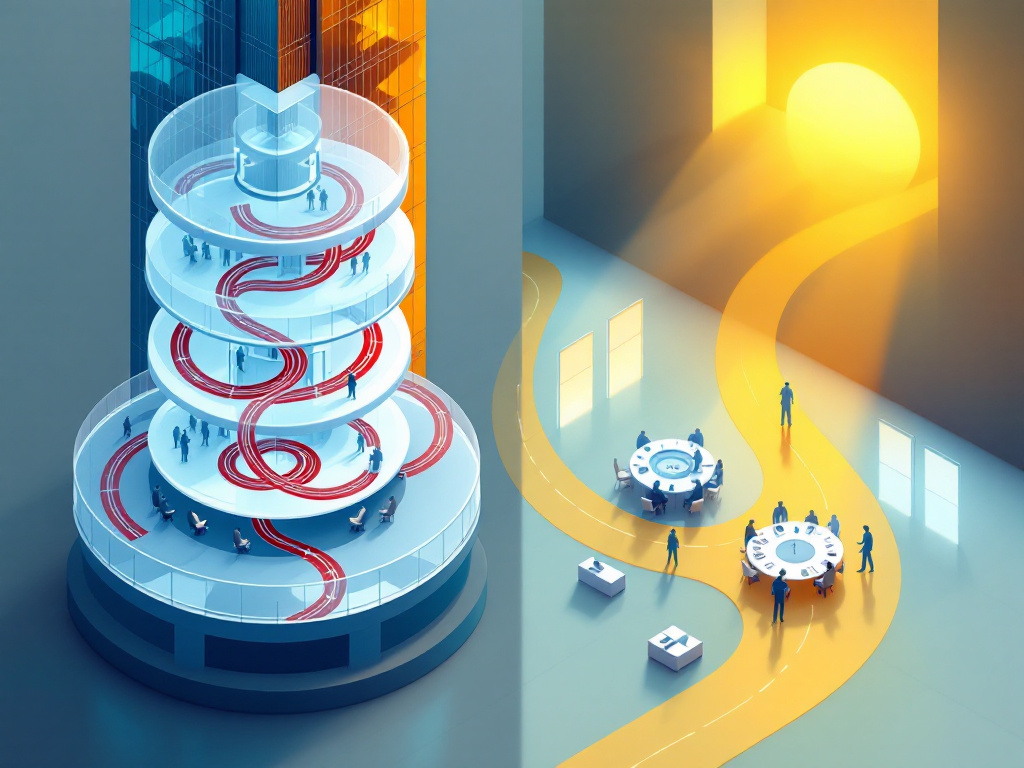
The Enterprise AI Deployment Problem
Large organizations face a structural disadvantage in AI automation. McKinsey's 2024 research found that 74% of enterprise AI pilots never reach production. The reasons are predictable:
- 18-24 month deployment cycles for even basic automation
- Committee-driven decision making that dilutes use case specificity
- Integration complexity across legacy systems
- Change management paralysis in large workforces
Oracle's situation illustrates this perfectly. Despite being a technology company with vast resources, they're cutting operational staff while their AI initiatives remain stuck in pilot phases. The layoffs aren't a sign of AI success—they're a sign of AI failure forcing cost cuts through headcount instead of efficiency.
Contrast this with what we see at DoozerAI: mid-size operations teams deploying autonomous digital workers in hours, handling 50 million+ automated tasks across 500+ organizations. The difference isn't sophistication—it's speed to value.
Why Mid-Size Operations Teams Have the Advantage
Mid-size companies (typically 200-2,000 employees) occupy a sweet spot for AI automation:
Enough complexity to benefit: They have real operational bottlenecks—order processing backlogs, compliance filing deadlines, customer support queues. These aren't theoretical problems.
Enough agility to act: A VP of Operations can identify a use case Monday, get approval Tuesday, and have a digital worker deployed by Friday. No 18-month steering committee.
Enough pain to prioritize: Unlike enterprises that can absorb inefficiency, mid-size companies feel operational friction directly in their margins.
One mid-size field services company we work with reduced compliance filing time from 40 hours to 4 hours per week. That's not a pilot program—that's 36 hours of capacity returned to revenue-generating work, deployed in under two weeks. Read the full case study here.
The Numbers: Mid-Size vs Enterprise AI Automation Platform for Operations Teams at Scale
- 12-24 months | Hours to days Deployment time
- 26% | 85%+ Pilot-to-production rate
- Negative (pilot costs) | 240% average First-year ROI
- 15-20% (when deployed) | 60% average Task reduction
- Custom development required | 60+ REST APIs, native connectors Integration complexity
- Months of planning | Auto-scaling 1-50+ workers Scaling approach
The enterprise numbers aren't speculation—they're drawn from Gartner and McKinsey research on AI deployment outcomes. The mid-size numbers come from our own platform data across 25+ industries.
The Counter-Argument: Don't Enterprises Have More Resources?
Yes. And that's precisely the problem.
More resources mean more stakeholders. More stakeholders mean more requirements. More requirements mean longer timelines. Longer timelines mean technology drift. Technology drift means starting over.
We've seen this cycle repeatedly. Paul Chada, our CEO, spent years at Kofax watching RPA promise 80% automation and deliver 30%. The technology wasn't the issue—the deployment model was.
Enterprises don't fail at AI automation because they lack budget. They fail because their organizational structure optimizes for risk mitigation, not speed to value. Every approval layer adds weeks. Every integration review adds months. By the time an enterprise AI project reaches production, the original use case has often evolved beyond recognition.
Mid-size companies don't have this luxury—and that's their advantage.

How DoozerAI Enables the Mid-Size Advantage
Our platform was built specifically for operations teams who need results this quarter, not next fiscal year:
Seven tool types, one platform: HTTP, Python, LLM, Knowledge/RAG, Workflow, MCP/Native integrations, Email. Your digital workers can handle multi-step processes without custom development.
Pre-built connectors: HubSpot, Salesforce, Microsoft 365, Google Workspace, SAP, ServiceTitan, Slack, Teams, Zendesk, Jira. The integrations your operations team actually uses.
Auto-scaling workers: Deploy one digital worker for a pilot, scale to 50+ as volume demands. No infrastructure planning required.
99.9% uptime: Your digital workers run 24/7. Order processing at 2 AM. Compliance filings on weekends. Customer responses in minutes, not hours.
A nonprofit we work with reduced donor due diligence from 2-4 hours per donor to 15 minutes. They didn't hire consultants or build custom integrations—they deployed a DoozerAI digital worker that handles the research, cross-references databases, and produces structured reports. The deployment took days, not months.
Real Deployment Examples
Tender Monitoring: A consulting firm deployed a digital worker to monitor 1,200+ tender opportunities representing €197M in potential revenue. Previously, this required dedicated analyst time that couldn't scale. Now it runs continuously.
Order Processing: A manufacturing company reduced customer status calls by 65% by deploying digital workers that proactively update customers on order progress. The workers pull from ERP, format updates, and send communications—all without human intervention.
KYC/Due Diligence: Financial services firms using our platform cut due diligence time from 2-4 hours to 15 minutes per case. The workers research across multiple sources, flag risks, and produce audit-ready documentation.
These aren't pilot programs. They're production deployments handling real volume, deployed by operations teams without dedicated AI engineering staff.
---
Ready to see how this works for your operations? Book a 15-minute platform walkthrough to see how DoozerAI compares to your current approach.
---
Frequently Asked Questions
How long does it actually take to deploy a DoozerAI digital worker?
Most deployments take hours to days, not weeks or months. The platform includes pre-built connectors for common business systems (Salesforce, HubSpot, Microsoft 365, etc.) and seven tool types that handle most operational use cases without custom development. Complex multi-system workflows may take longer, but we've never seen a deployment exceed two weeks.
What's the difference between DoozerAI and traditional RPA?
Traditional RPA follows rigid scripts that break when interfaces change. DoozerAI digital workers use LLM reasoning to handle exceptions, adapt to variations, and make decisions within defined parameters. When a form field moves or an email format changes, our workers adapt rather than fail. This is why we see 60% task reduction versus the 20-30% typical of RPA deployments.
Do we need AI engineers or data scientists to use the platform?
No. DoozerAI is designed for operations teams, not AI specialists. The Agent Builder uses natural language configuration—you describe what you want the worker to do, connect your systems, and deploy. Technical teams can access 60+ REST APIs for advanced customization, but it's not required for most use cases.
What happens when a digital worker encounters something it can't handle?
Workers are configured with escalation rules. When they encounter edge cases outside their parameters, they flag the item for human review with full context. You maintain control over exception handling—the workers handle the 80% of routine work so your team can focus on the 20% that requires judgment.
How does pricing work for mid-size companies?
DoozerAI pricing scales with usage, not seat count. You pay for worker capacity, not per-user licenses. This means you can deploy automation across your entire operations team without multiplying costs. See our pricing page for current tiers and volume options.
---
The Window Is Open—For Now
Mid-size companies have a temporary advantage. Enterprises will eventually solve their deployment problems—they have the resources to iterate until something works. But right now, the agility gap is real and exploitable.
Every month an enterprise spends in committee meetings is a month a mid-size competitor can use to deploy, learn, and optimize. The companies that move now will build operational advantages that compound over time.
Oracle's layoffs are a warning sign, not a success story. Don't wait for AI to become "enterprise-ready." The mid-size approach—fast deployment, immediate ROI, iterative improvement—is working right now.
Start your assessment to identify your highest-impact automation opportunities, or book a demo to see the platform in action.